TL;DR
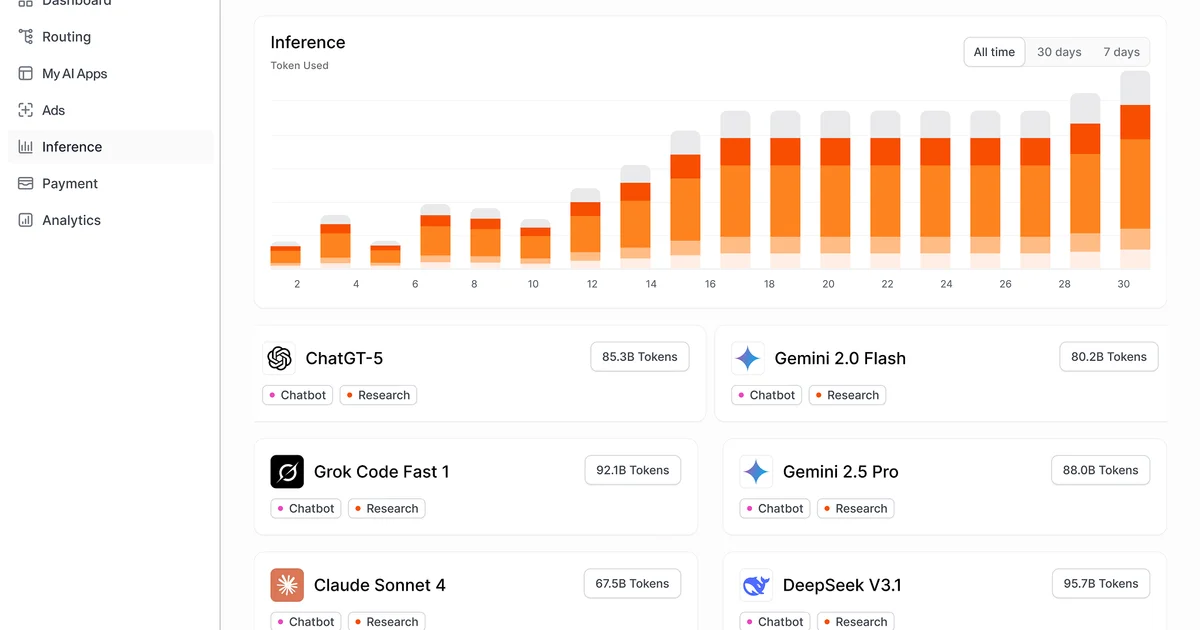
TL;DR: Sudo is a unified API gateway for LLMs — one endpoint routes requests to OpenAI, Anthropic, Google, and other providers while optimizing for cost and speed. It also layers in context management and usage-based monetization, so you can route, serve, and monetize AI apps from a single place.
Source and Accuracy Notes
- Project page: sudoapp.dev ← verified
- Documentation: docs.sudoapp.dev ← verified via direct fetch
- HN launch thread: news.ycombinator.com/item?id=45105574 ← HN ID 45105574
- License: proprietary (no open-source license found — SDK is npm package, not OSS)
What Is Sudo?
Sudo positions itself as an all-in-one developer platform for LLM routing, with a pitch that goes beyond simple API aggregation. Their docs describe it as:
“Sudo is a unified API for large language models. We make it simple for developers to route across different LLMs while getting better performance, lower cost, and higher uptime than going direct.”
The core value proposition is one API endpoint that routes to multiple LLM providers (OpenAI, Anthropic, Google, and others), with Sudo’s router optimizing each call for speed and price. The tagline on the product page reads: “Turn every API call, AI generation, or user interaction into revenue.”
Sudo is not open source — it’s a hosted commercial product with an npm SDK (@sudo-app/sdk).
Key Features
Unified LLM Routing
One API call targets multiple providers. Sudo’s router selects the best model for the task based on latency, cost, and availability. You write to one interface; Sudo handles the multi-provider orchestration behind it.
Context Engineering
Rather than manually rewriting system prompts for each model, Sudo lets you attach context (documents, links, instructions) once per session. Their docs describe it as:
“Attach documents, links, or instructions once, and Sudo will automatically manage and optimize context across every model call, without manually rewriting system prompts.”
Built-in Monetization
Sudo’s roadmap includes usage-based billing and contextual ad placement — so AI developers can monetize end-user interactions directly through the platform rather than stitching together a separate payments layer.
Developer SDK
npm install @sudo-app/sdk
```bash

The SDK is available on npm. The docs are hosted at `docs.sudoapp.dev` (Mintlify) and include a Quick Start guide.

## Getting Started

1. **Sign up** at [sudoapp.dev/dev/login](https://sudoapp.dev/dev/login) for a developer account
2. **Install the SDK**:

```bash
npm install @sudo-app/sdk- Configure your API key — keys are managed through the Sudo developer portal
- Route your first call via the unified endpoint, or use the context management features to persist conversation state across turns
How Sudo Fits Into the Stack
Sudo occupies a similar lane as Portkey or Gateway.sh — it sits between your application and the LLM providers. The key differences:
| Sudo | Portkey | Direct API | |
|---|---|---|---|
| Multi-provider routing | Yes | Yes | No |
| Context management | Yes | Partial | No |
| Built-in monetization | Yes | No | No |
| Open source | No | Partial | N/A |
Sudo’s monetization angle is the differentiator — most routing layers stop at the API abstraction. Sudo adds billing, usage limits, and ad placement on top.
Practical Evaluation Checklist
- One API key replaces multiple provider keys — simpler credential management
- Router optimizes for cost/speed automatically per request
- Context attachments persist across model calls without prompt engineering
- Monetization features target developers who want to charge end users directly
- SDK is TypeScript/npm based — standard Node.js integration
- Docs are clean and Mintlify-hosted at
docs.sudoapp.dev
Security Notes
- API keys are managed through the developer portal, not stored in code
- No open-source component means no self-hosting option currently — all traffic goes through Sudo’s infrastructure
- SOC 2 / security certifications not mentioned on the site; enterprise compliance needs should be verified with the team directly
FAQ
Q: Is Sudo open source? A: No. Sudo is a proprietary hosted service with an npm SDK. There is no self-hosted or open-source version.
Q: Which LLM providers does Sudo support? A: The docs mention OpenAI, Anthropic, and Google as supported providers. Full provider list is in the official docs.
Q: How does monetization work? A: Sudo provides usage-based billing and contextual ad placement — you can charge end users per query or earn revenue through ads embedded in AI interactions. Details are in the platform docs.
Q: Is there a free tier? A: Pricing is not listed publicly on the main site. Contact the Sudo team via their Discord or Calendly link on the homepage for current rates.
Conclusion
Sudo is a pragmatic choice for developers who want one API surface for multi-provider LLM routing, plus the ability to monetize the AI apps they build without cobbling together separate billing infrastructure. The context engineering angle is also useful — instead of hand-tuning prompts per model, you attach documents once and let Sudo handle distribution.
If you’re building AI features that need to route between models, optimize cost, or charge end users, Sudo is worth evaluating. Start with the Quick Start guide and the free developer portal account.
Related Posts
ai-setup
Recall – Persistent Memory for Claude Code via MCP Hooks
Recall gives Claude Code a permanent memory store that survives session restarts and context compaction. Four hooks capture and restore context automatically — with cloud SaaS or self-hosted options.
2/28/2026
dev-tools
Automotive Skills Suite for AI Engineering
Evaluate Automotive Skills Suite for APQP, ASPICE, HARA, safety-plan, and DIA workflows with setup notes, governance risks, and SME review guidance.
5/28/2026
dev-tools
awesome-agentic-ai-zh Roadmap Guide
Explore awesome-agentic-ai-zh as a Chinese agentic AI learning roadmap, with setup notes, track selection, study workflow, and evaluation guidance.
5/28/2026