Theneo - AI API Documentation Generator for Stripe-Like Docs
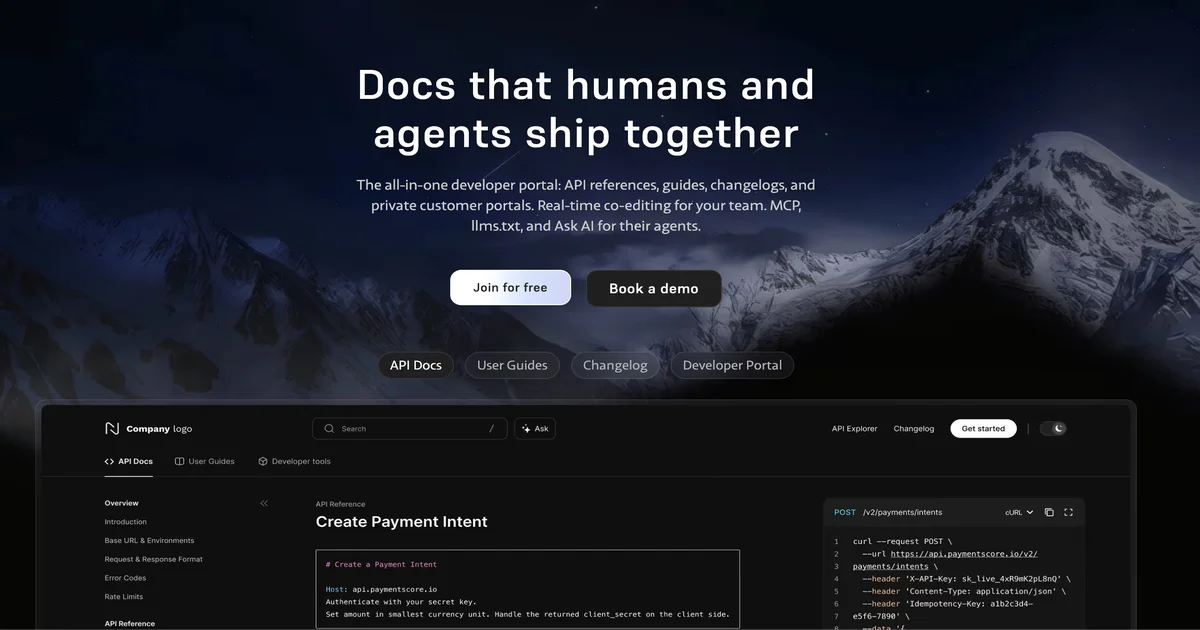
Theneo generates beautiful API documentation automatically using ML models. Supports Stripe-like docs, MCP integration, and real-time team collaboration.
TL;DR
TL;DR: Theneo uses ML models to automatically generate Stripe-style API documentation from your API schema, eliminating the tedious manual work of writing and maintaining API docs.
Source and Accuracy Notes
- Product: https://theneo.io
- HN Launch: Theneo - Generate Stripe-Style API Docs (YC W22, 154pts)
- Category: Non-GitHub YC W22 product
What Is Theneo?
Theneo is an AI-powered API documentation platform built for teams that want Stripe-quality docs without the manual effort. Instead of writing documentation from scratch, you feed your API schema to Theneo and its ML models generate structured, readable reference pages, guides, and changelogs automatically.
The core pitch: API documentation is painful to write and even more painful to keep updated. Developers are not technical writers, and documentation is never their priority. Theneo handles the grunt work so your team can focus on building.
What Theneo Generates
Theneo produces several documentation types from your API input:
- API Reference — Auto-generated endpoint documentation with request/response schemas, parameter descriptions, and example payloads
- Changelogs — Track API version history and breaking changes automatically
- Guides — Step-by-step tutorials for common API workflows
- Private Customer Portals — Branded, customer-specific documentation for API consumers
- MCP Integration — Machine-readable documentation for AI agent consumption via the Model Context Protocol
Theneo also generates llms.txt files, making your API documentation accessible to AI coding assistants that can read LLMP.txt.
Setup Workflow
Getting started with Theneo involves connecting your API and customizing the generated output.
Step 1: Connect Your API
Theneo accepts OpenAPI/Swagger schemas as the primary input format. You can import your schema by:
- File upload — Drag and drop your
openapi.yamlorswagger.jsondirectly into the dashboard - URL import — Point Theneo to a public or authenticated URL where your schema lives
- Postman collection — Import a Postman collection to generate documentation from your existing API definitions
Theneo also supports MCP servers as documentation sources, making it useful for teams building agentic AI systems.
Step 2: Review and Customize Generated Docs
After import, Theneo generates documentation pages and presents them in an editor. The AI-generated content covers:
- Endpoint descriptions and parameter documentation
- Example request and response payloads
- Error code explanations
- Authentication flow descriptions
You can edit any section directly in Theneo’s visual editor. The editor is built on Lexical (Meta’s text editor framework), which supports rich formatting, code blocks, and collaborative editing. Your team shares unlimited seats, so engineers, technical writers, and product managers can all contribute.
Step 3: Publish and Distribute
Theneo publishes documentation as a hosted site with your branding. You get:
- A public documentation portal at
yourcompany.theneo.io - Custom domain support for white-labeling
- Private portals for customer-specific API documentation
- Versioned docs per API release
The published site updates automatically when you push schema changes through Theneo’s webhook integration.
Deeper Analysis
Why Theneo Stands Out
Most API documentation tools focus on presenting documentation you’ve already written. Theneo’s differentiator is the generation layer — the ML models infer documentation structure and descriptions from your API schema itself.
Stripe’s documentation is widely regarded as the gold standard for API reference pages. Theneo explicitly targets that visual style and information density. The result looks familiar to anyone who has read Stripe’s docs, but the content is generated from your actual API.
Real-Time Collaboration
The built-in collaborative editor sets Theneo apart from static documentation generators. Multiple team members can edit simultaneously, with autosave preventing data loss. The editor supports dark mode and mobile editing — a practical consideration for teams working across time zones.
MCP and AI Agent Support
The MCP (Model Context Protocol) integration is forward-looking. As AI coding agents become more prevalent, providing machine-readable API documentation becomes important. Theneo generates MCP-compatible documentation that lets AI agents understand and consume your API without human mediation.
The llms.txt generation is another AI-friendly format, making Theneo’s output compatible with AI assistants that read LLMP.txt files for context.
Changelog Automation
API changelogs are often neglected until a major breaking change forces teams to write one retroactively. Theneo generates changelogs from your version history, making it easy to communicate updates to API consumers proactively.
Practical Evaluation Checklist
When evaluating Theneo for your team, consider the following:
Schema Quality
- Does your API have a well-defined OpenAPI or Swagger schema?
- Are schema descriptions and comments present for automatic text generation?
- Is your schema kept up to date as part of your API development workflow?
Team Workflow
- Do you have non-engineers who need to contribute to API documentation?
- Does your team need real-time collaborative editing on technical docs?
- Do you need customer-specific private documentation portals?
Integration Requirements
- Do you need custom domain or white-label branding for your docs?
- Do you consume AI agents that require LLMP.txt or MCP documentation?
- Do you publish documentation as part of a CI/CD pipeline?
Alternatives Considered
- Mintlify — visual documentation with AI-assisted writing, different generation approach
- Theneo focuses specifically on API reference documentation where it excels
- For general developer documentation, Mintlify and Mintlify serve overlapping but distinct use cases
Security Notes
Theneo hosts your documentation on their infrastructure. Consider the following:
- Schema Sensitivity — Your OpenAPI schema may contain internal endpoint descriptions, deprecated fields, or implementation hints. Review generated output before publishing.
- Private Portals — Customer-specific documentation is isolated but hosted by Theneo. Assess data residency requirements.
- API Keys — Theneo requires API access to import schemas. Use read-only credentials where possible.
FAQ
Q: Does Theneo work with REST and GraphQL APIs? A: Theneo primarily supports REST APIs via OpenAPI and Swagger schemas. GraphQL support is available through schema introspection. For other protocols, check Theneo’s documentation for the latest supported formats.
Q: Can I self-host Theneo documentation? A: Theneo is a SaaS platform. Self-hosted documentation options include Mintlify, Docusaurus, or Scalar. Theneo generates hosted documentation with white-label support.
Q: How does Theneo compare to Mintlify? A: Both are AI-assisted documentation platforms. Theneo focuses on API reference documentation with schema-driven generation. Mintlify offers broader documentation coverage including guides and runnable code examples. The best choice depends on your primary documentation type.
Q: Does Theneo support versioning? A: Yes. Theneo tracks API versions and generates versioned documentation automatically. You can publish specific versions and set a default for API consumers.
Q: What format does Theneo export documentation in? A: Documentation is primarily hosted on Theneo’s platform. You can export as static HTML, and Theneo generates LLMP.txt and MCP-compatible formats for machine consumption.
Conclusion
Theneo solves a specific problem: API documentation that looks like Stripe’s but requires a fraction of the manual effort. The ML-driven generation from OpenAPI schemas means your documentation stays in sync with your actual API surface as you iterate.
For teams that ship APIs to external developers, the quality of your documentation directly affects adoption. Theneo automates the tedious parts so technical writers and engineers can focus on the content that actually needs human expertise — conceptual guides, tutorials, and edge case explanations.
If your team currently writes API docs by hand or struggles to keep documentation in sync with a fast-moving API, Theneo is worth evaluating. The AI generation handles the boilerplate; your team handles the nuance.
Related Posts
dev-tools
Automotive Skills Suite for AI Engineering
Evaluate Automotive Skills Suite for APQP, ASPICE, HARA, safety-plan, and DIA workflows with setup notes, governance risks, and SME review guidance.
5/28/2026
dev-tools
awesome-agentic-ai-zh Roadmap Guide
Explore awesome-agentic-ai-zh as a Chinese agentic AI learning roadmap, with setup notes, track selection, study workflow, and evaluation guidance.
5/28/2026
dev-tools
Baguette iOS Simulator Automation Guide
Set up Baguette for iOS Simulator automation, web dashboards, device farms, gesture input, streaming, and camera testing with Xcode caveats.
5/28/2026